Index · Edition · cs-2-0-lama-at
Lama — Crypto Stamp 2.0
Lama
Crypto Stamp 2.0 Lama is part of the four-motif set of the second Mainstream edition by Österreichische Post. The motif references the South American lama and was the last variant still available during pre-order. Issued on 25 June 2020 with a mintage of 60,000, ERC-721 token on Ethereum, five color variants.
Variants
| Variant | Variant | Color | Mintage | Rarity |
|---|---|---|---|---|
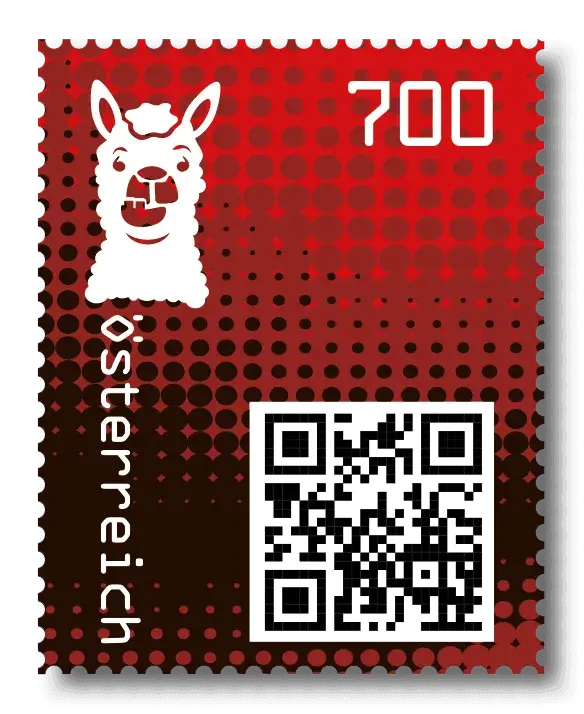 | Red | #C8281F | 600 | 1 |
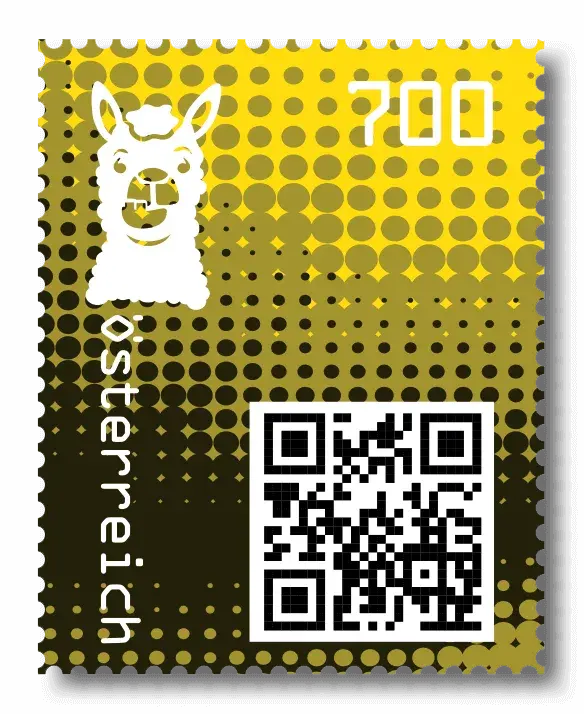 | Yellow | #F5C518 | 4,020 | 2 |
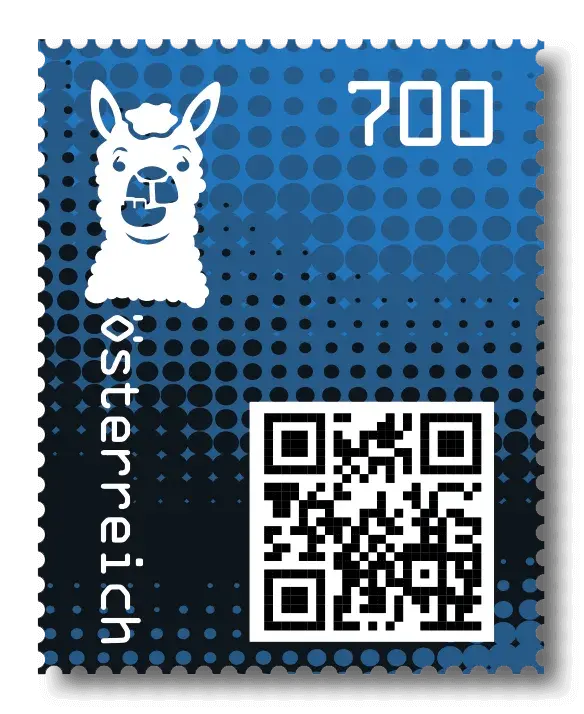 | Blue | #1F4FA8 | 7,980 | 3 |
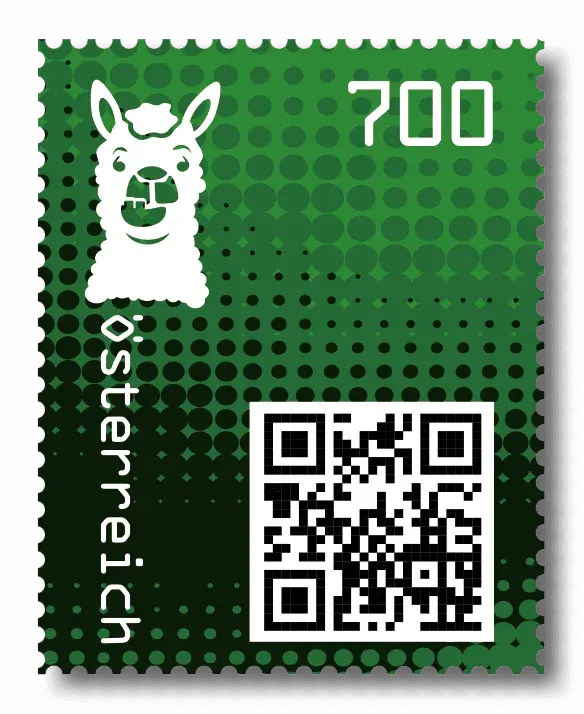 | Green | #3F8B3F | 16,020 | 4 |
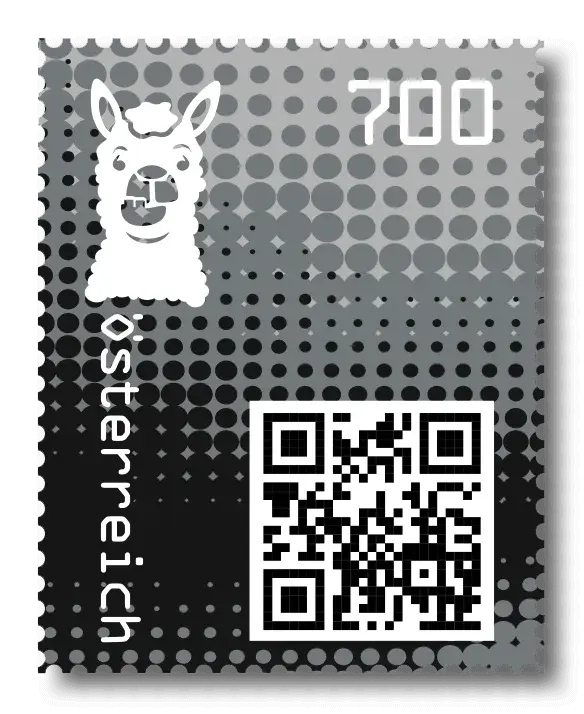 | Black | #1F1E1C | 31,380 | 5 |
Image: Österreichische Post AG
About the Motif
The lama (Lama glama) is a camelid that has been domesticated as a pack animal in the South American Andes for over 4,000 years. It lives at altitudes up to 5,000 meters, feeds on sparse mountain vegetation, and can carry loads of up to 30 kilograms across long distances. In crypto folklore, the lama symbolizes relaxed resilience — an animal that functions under extreme conditions without visible strain.
Designer David Gruber presents the lama on Crypto Stamp 2.0 in a heavily stylized form, in the characteristic geometric reduction that defines the entire four-motif set.
Spelling and Terminology
In German and on the official stamp text of Österreichische Post, the spelling is "Lama" with a single L; the English press release likewise uses the single-L form "lama." The internationally more common English spelling "llama" with a double L was not adopted. The later tech phenomenon "LLM" (Large Language Models) and Meta's LLama model family had not yet entered public awareness in 2020, the release year of Crypto Stamp 2.0 — the dual meaning is thus a retrospective detail.
Special Role in Pre-Order
Lama was the last remaining motif from the four-piece set in the official pre-order at Österreichische Post. While Doge had sold out by 25 May 2020, Panda by 5 June, and Honey Badger by 8 June, Lama remained available until the regular pre-order closing on 10 June 2020. This unique position makes Lama the "straggler" variant among collectors, with slightly less speculative dynamics in the first weeks after release — an irony given the uniform mintage of 60,000 across all four motifs.
Secondary Market
On secondary markets such as Delcampe, eBay, and through specialized stamp dealers, Crypto Stamps 2.0 Lama trade regularly today. Black variants (31,380 pieces) tend to be slightly cheaper than the other three motifs, because Lama as the "quietest" of the four experienced the lowest speculation pressure. Red Lamas (600 pieces) nonetheless command collector prices in the three- to four-figure range.
Place in the Set
Within the four-motif edition, the Lama functions as a grounded counterweight to the speculative dynamics of the other three motifs. Where Doge had a direct cryptocurrency connection, Panda brought strong branding potential, and Honey Badger carried a meme-culture reference, Lama represents sober patience — a motif that does not seem to share the trader frenzy of the crypto world. That it was the only motif still available at the close of pre-order reinforces this characterization both for collectors and semiotically.
Frequently Asked Questions
Why was the lama chosen as a motif?
The lama is part of the crypto animal gallery motif palette. In crypto folklore, the lama stands for relaxed resilience — an animal that lives at extreme altitudes and carries loads without visible strain.
Was the Lama available the longest during pre-order?
Yes. While Doge was sold out by 25 May 2020, Panda by 5 June and Honey Badger by 8 June, the Lama remained available until the official end of pre-order on 10 June 2020. It was the only one of the four motifs not already sold out during pre-order.
Is it lama or llama?
In German, and officially on the Austrian stamp, the spelling is "Lama." The English form "llama" with a double L is the more common international spelling. The English press release from Österreichische Post likewise uses the single-L form "lama."
What is the Lama's ANK catalog number?
In the Austria Netto Katalog, Crypto Stamp 2.0 Lama is listed as "Crypto stamp 4" with sub-letters a (Black), b (Green), c (Blue), d (Yellow) and e (Red).