Four animal motifs from crypto culture (Doge, Panda, Lama, Honey Badger) · 2020
Crypto Stamp 2.0 Animal Motifs
Crypto Stamp 2.0 is the second Mainstream edition by Österreichische Post. Released on 25 June 2020 as a set of four motifs from the crypto scene: Doge, Panda, Lama, and Honey Badger. Designed by David Gruber, mintage of 60,000 per motif (240,000 total), face value 7.00 EUR. Last Crypto Stamp edition on Ethereum before the Polygon migration with CS 3.0.
Image rights pending
We have contacted the rights holder for permission to feature this image here.
History
Following the overwhelming success of Crypto Stamp 1.0, Österreichische Post moved swiftly to a sequel. On 25 June 2020, Crypto Stamp 2.0 launched as a four-motif set: Doge, Panda, Lama, and Honey Badger. Unlike the inaugural edition — a single unicorn motif at 150,000 pieces — the print run was raised to 240,000, distributed evenly across four animals (60,000 each).
Pre-orders opened on 20 May 2020 and were originally meant to run until 10 June. The Post's online shop, however, repeatedly buckled under demand. The Doge variant sold out as early as 25 May, Panda by 5 June, Honey Badger by 8 June. Only the Lama remained available throughout pre-order. On secondary markets like eBay, listings appeared at premium prices within days of pre-order opening.
Concept and Design
The four motifs are not arbitrary selections but references to crypto culture:
- Doge is the internet meme template featuring a Shiba Inu, brought to wider fame through the Dogecoin cryptocurrency
- Panda represents the WWF emblem and the cause of endangered species
- Lama references South American highland animals and the LLama family of language models
- Honey Badger plays on the viral meme "Honey Badger Don't Care" and the resilience archetype within the crypto community
The series was designed by David Gruber, who has since gone on to design several Crypto Stamp generations — including the joint editions with PostNL from 2022 onward.
Technical Specifications
Crypto Stamp 2.0 introduced material changes versus the inaugural edition: cardboard replaced plastic in pursuit of more environmentally friendly production. The adhesion mechanism switched from self-adhesive (CS 1.0) to gummed/wet-adhesive. Format remained 86 × 54 mm, the ISO credit card standard. Variuscard produced the block again, using offset and screen printing complemented by hot stamping and thermography for security features.
On the digital side, Ethereum remained the chain of issue: Crypto Stamp 2.0 was the last Mainstream edition issued as an ERC-721 token on the Ethereum mainchain. Only Crypto Stamp 3.0 in 2021 made the switch to Polygon, lowering gas fees and enabling NFC-based authentication.
Variant Distribution
As with CS 1.0, the five-tier color rarity model continued, with refined per-motif counts:
- Black: 31,380 pieces (52.30%)
- Green: 16,020 pieces (26.70%)
- Blue: 7,980 pieces (13.30%)
- Yellow: 4,020 pieces (6.70%)
- Red: 600 pieces (1.00%)
Across all four motifs, this yields 2,400 red stamps among 240,000 total. The red variant thus became more numerous in absolute terms than CS 1.0 (1,500 of 150,000), yet equally rare in percentage. In the Austria Netto Katalog, each motif received its own Crypto Stamp main number: Doge became Crypto stamp Nr. 2, Panda Nr. 3, Lama Nr. 4, and Honey Badger Nr. 5 — each with subletters a (Black) through e (Red).
Significance
Crypto Stamp 2.0 marked the transition from experiment to series. The four-motif format proved the model was scalable — a foundation on which subsequent editions would build. The now-established color rarity distribution (1/6.7/13.3/26.7/52.3%) became the structural template for every later Mainstream edition by Österreichische Post.
Editions in this family
| Issued | Edition | Edition | ISO | Chain | Program |
|---|---|---|---|---|---|
| 2020-06-25 | 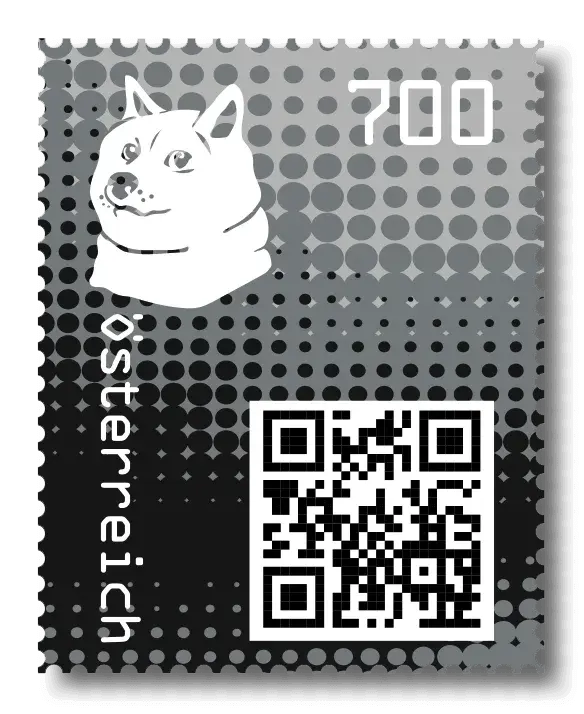 | Doge | AT | mainstream | |
| 2020-06-25 | 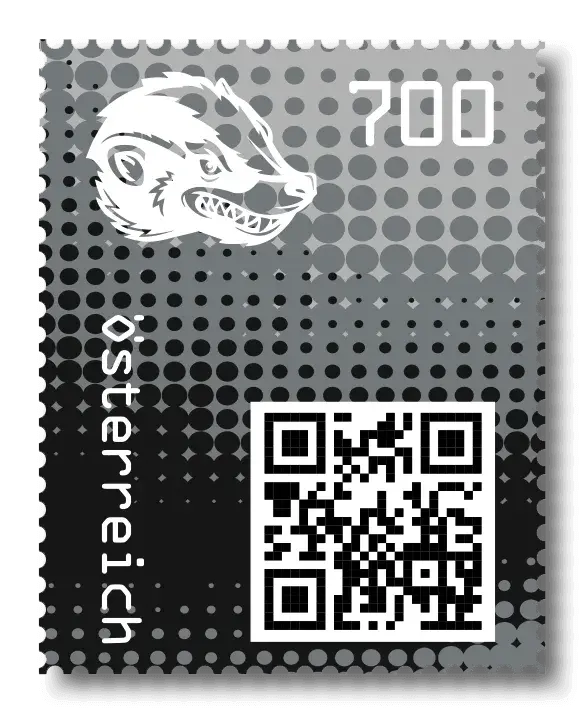 | Honey Badger | AT | mainstream | |
| 2020-06-25 | 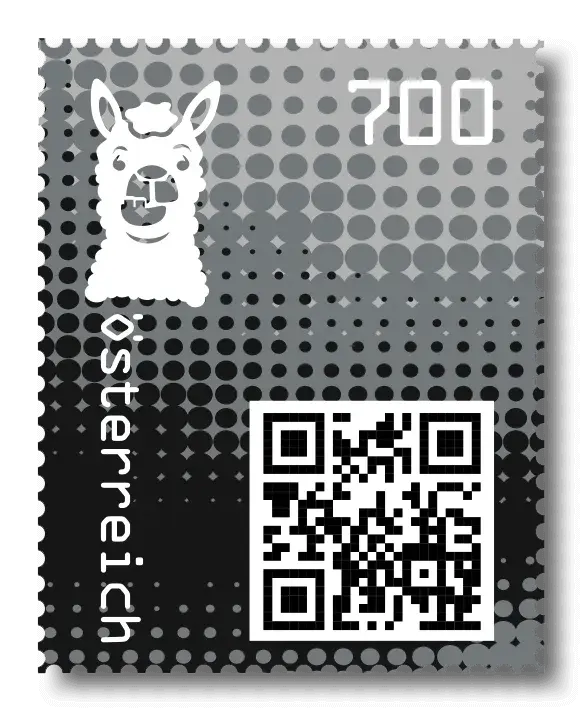 | Lama | AT | mainstream | |
| 2020-06-25 | 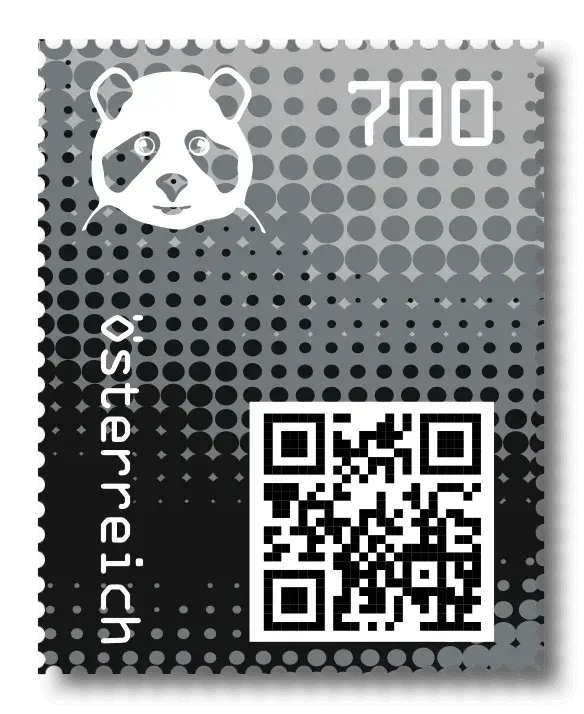 | Panda | AT | mainstream |