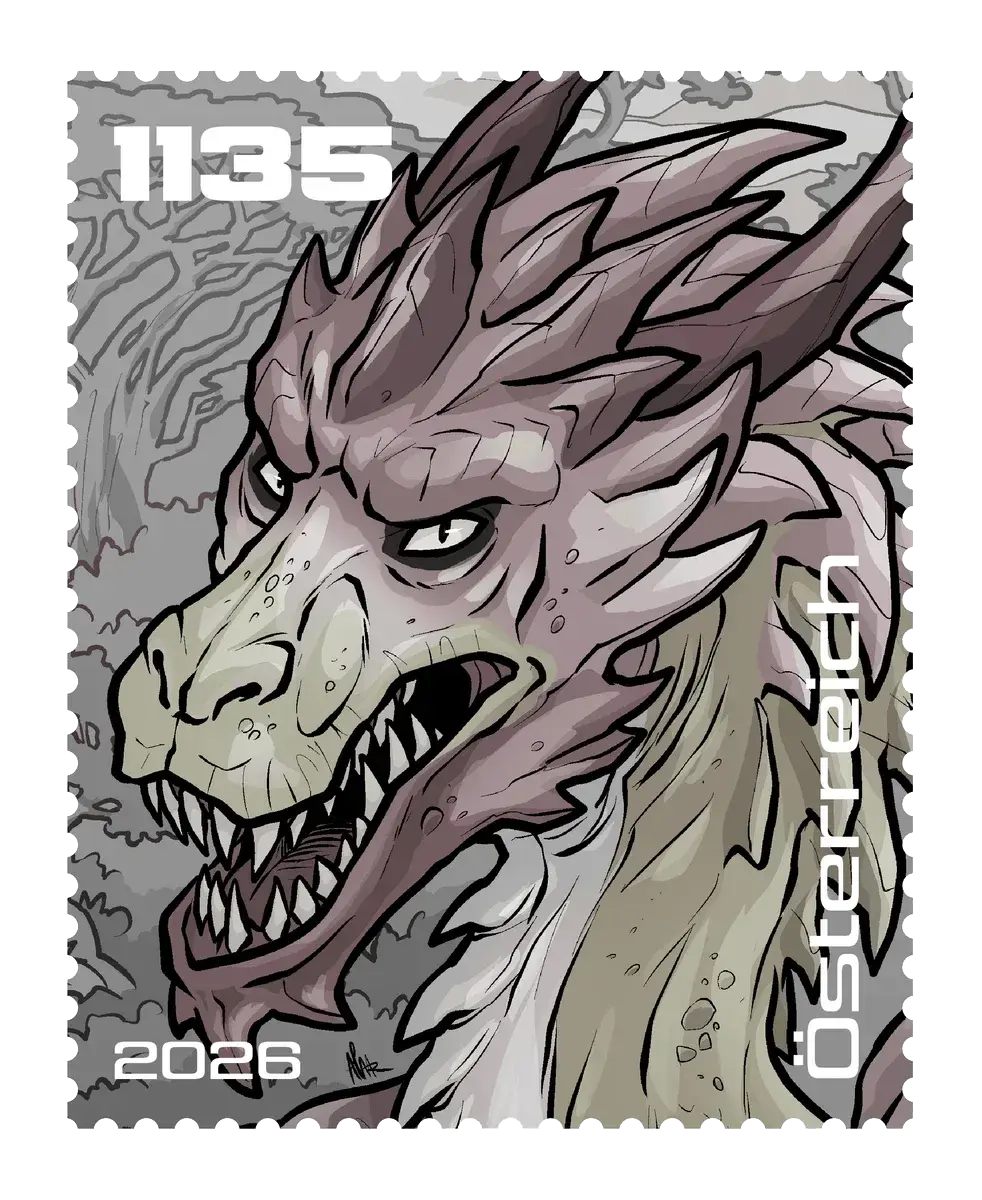
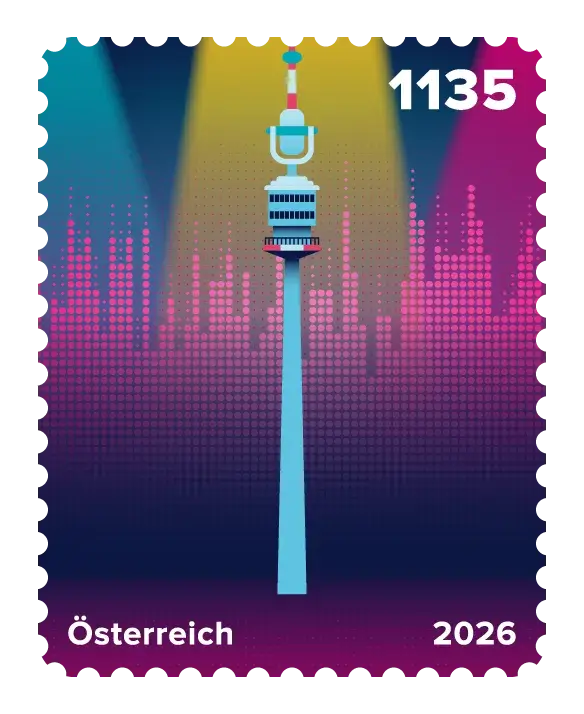
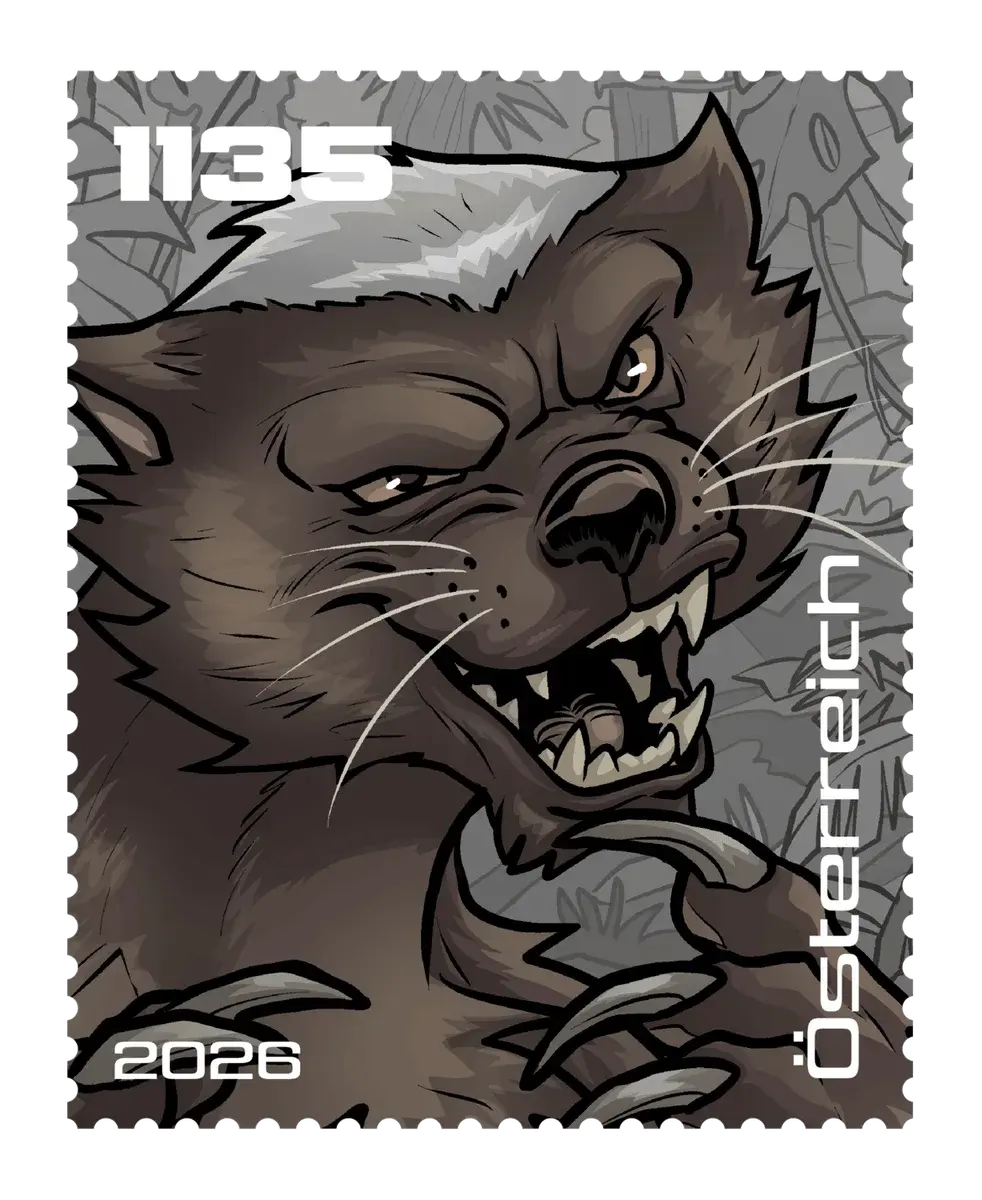
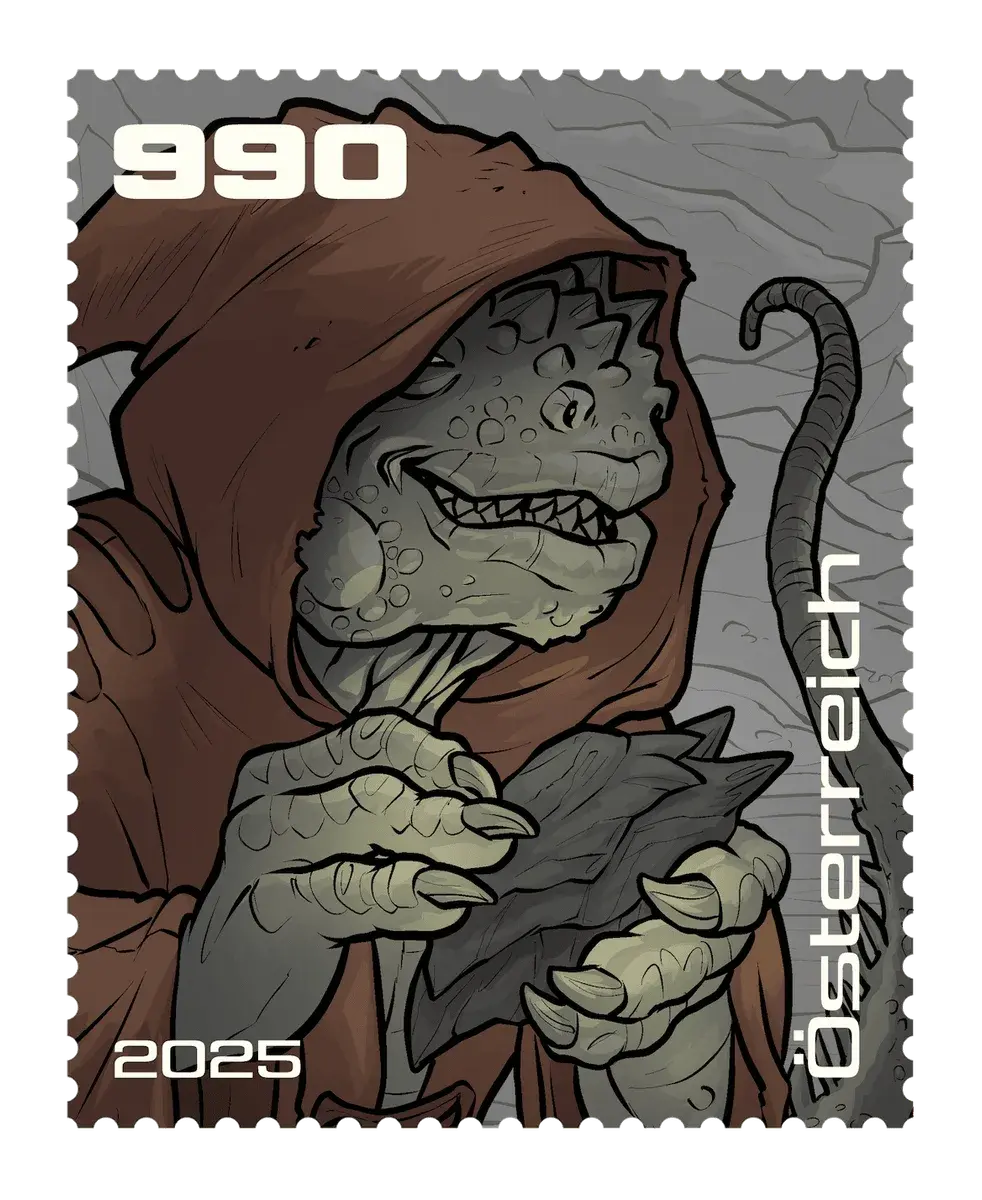
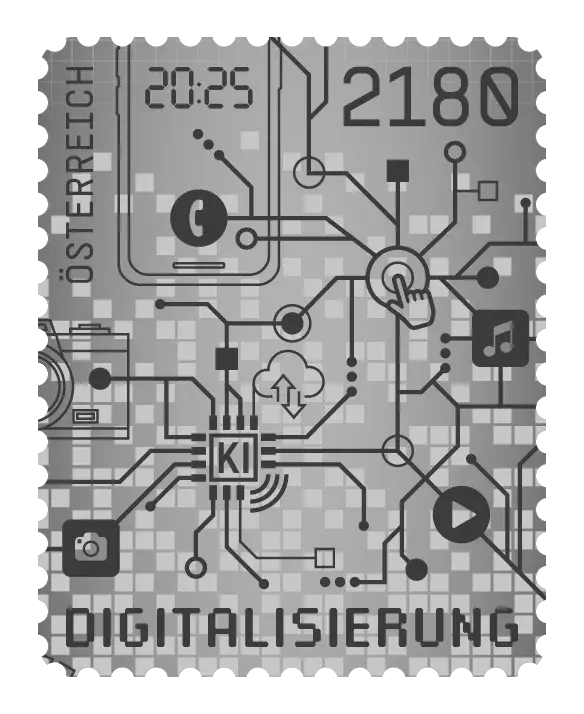
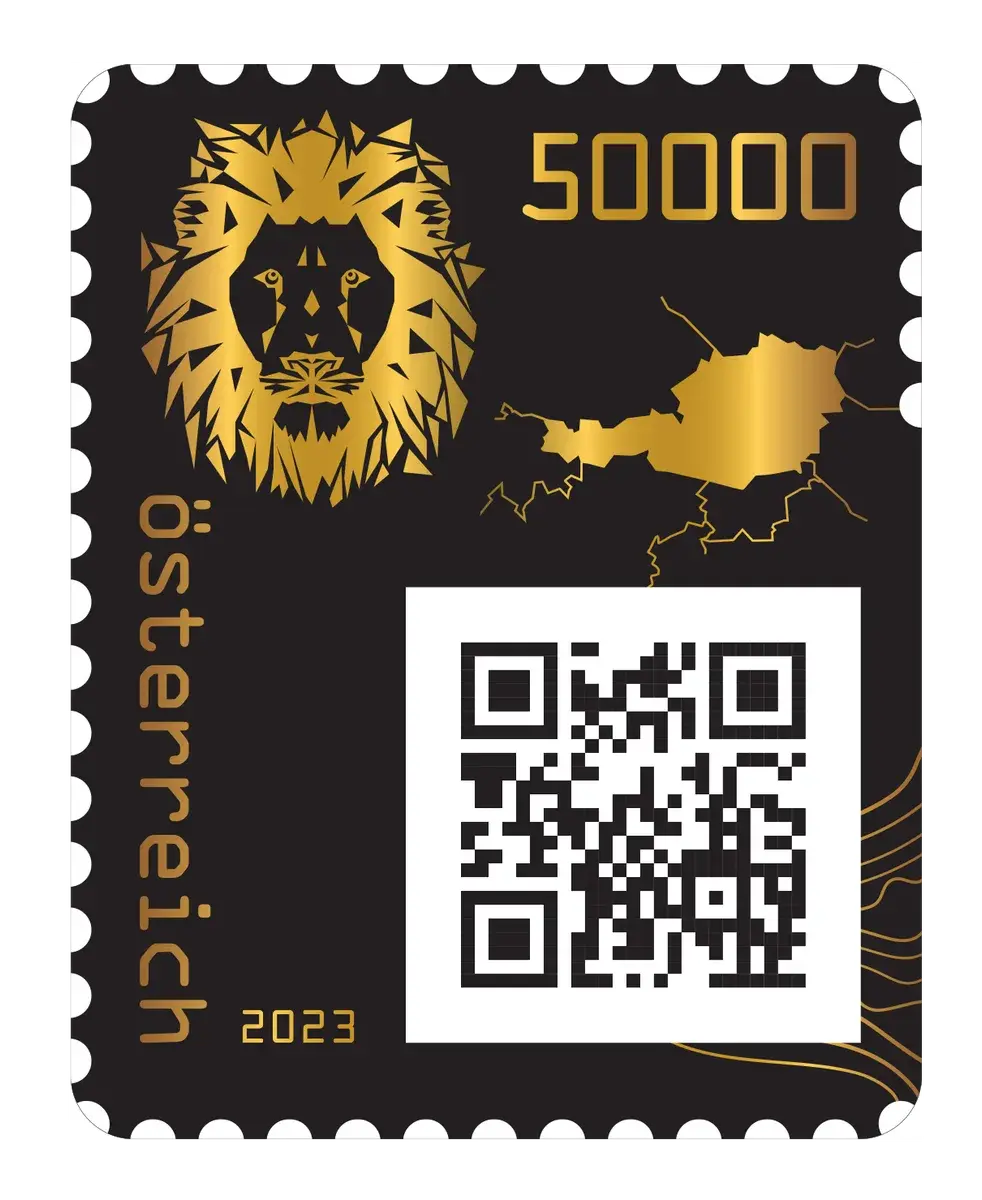
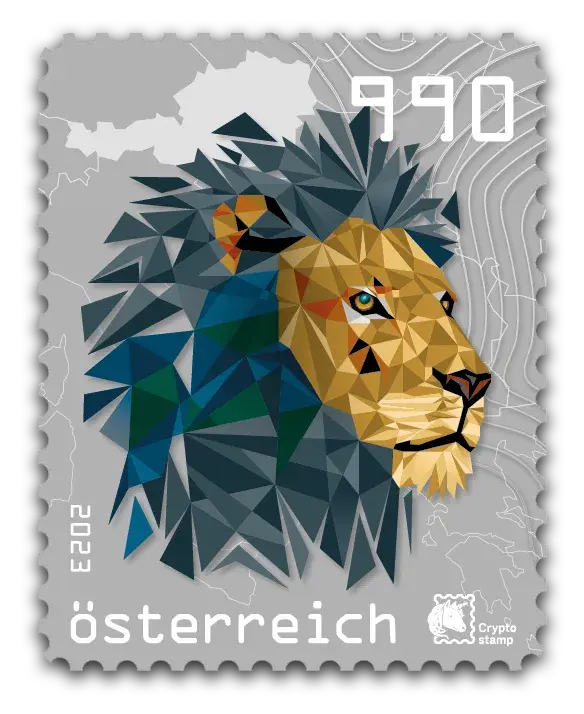
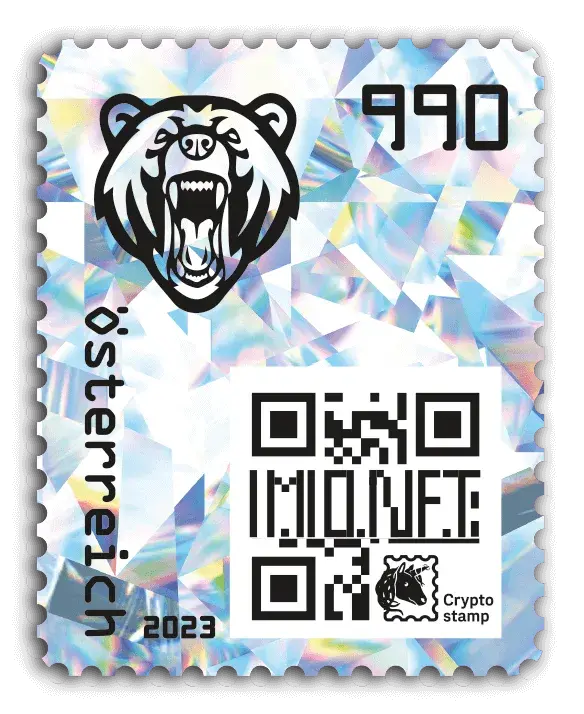
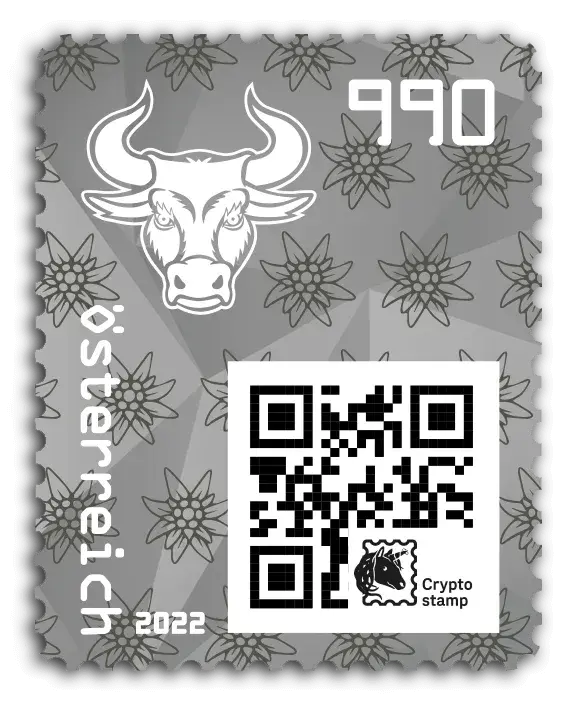
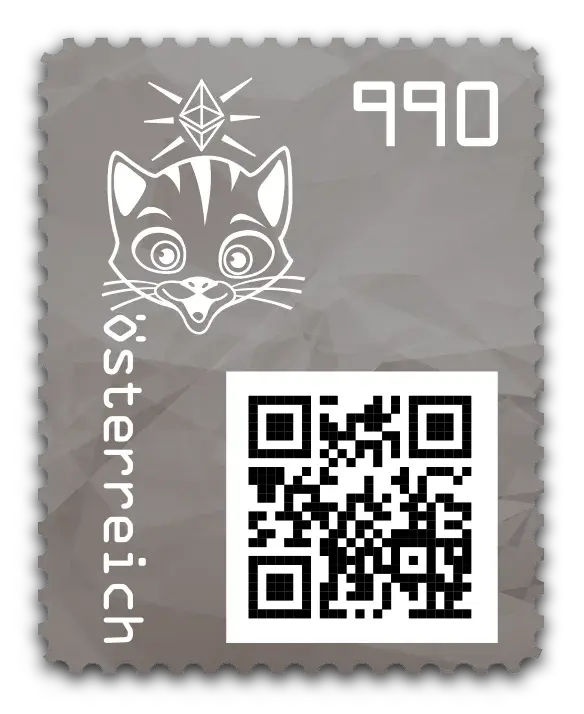
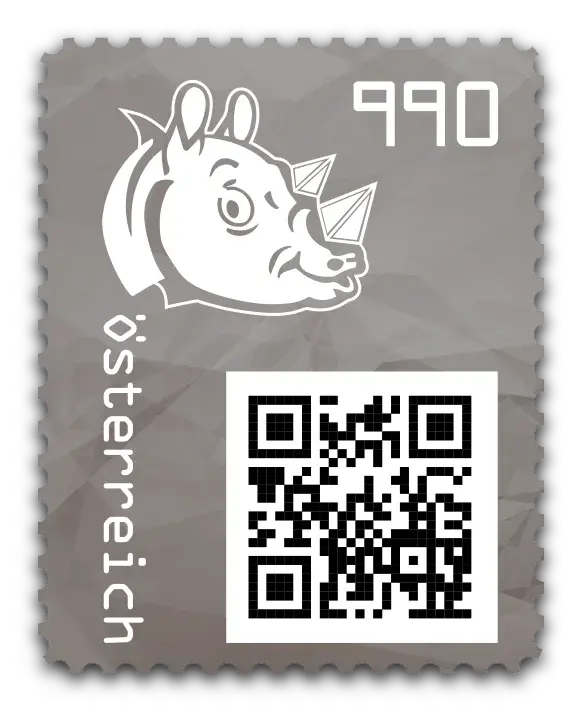
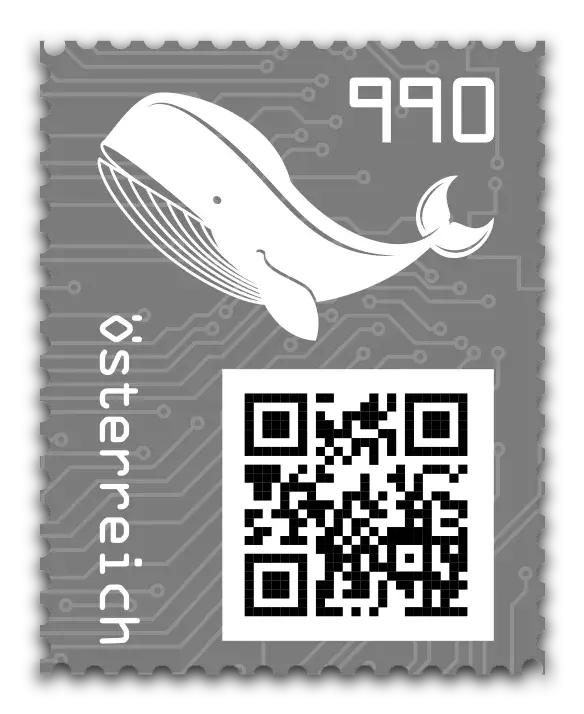
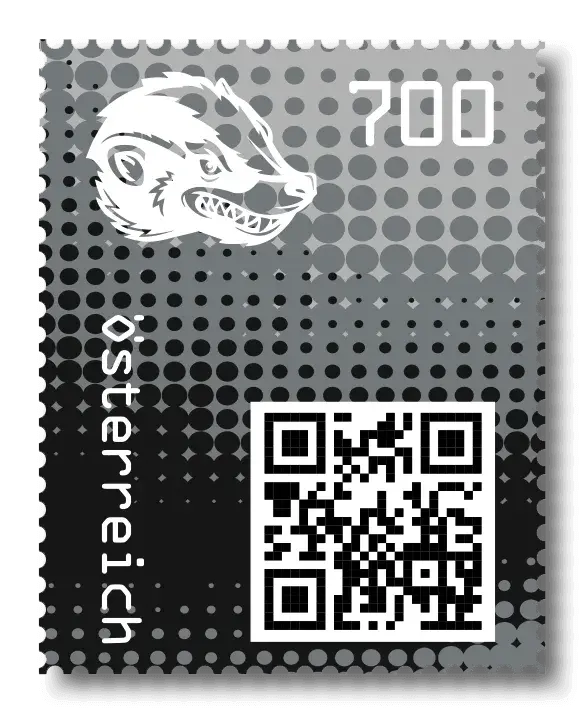
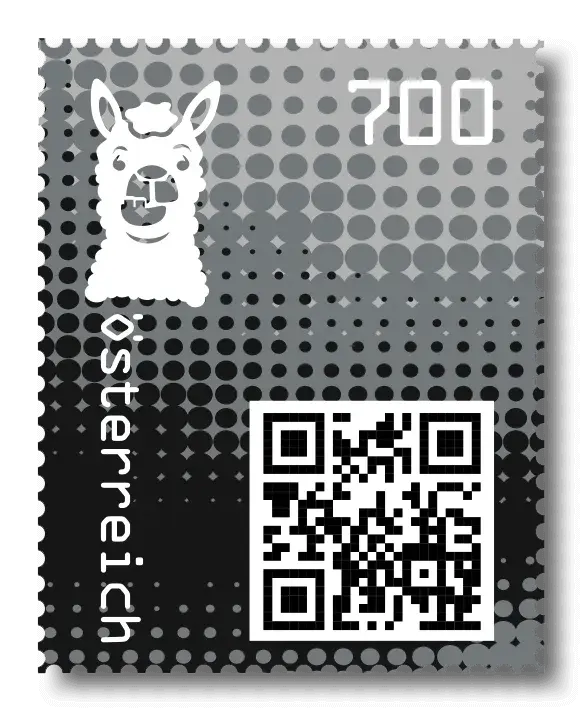
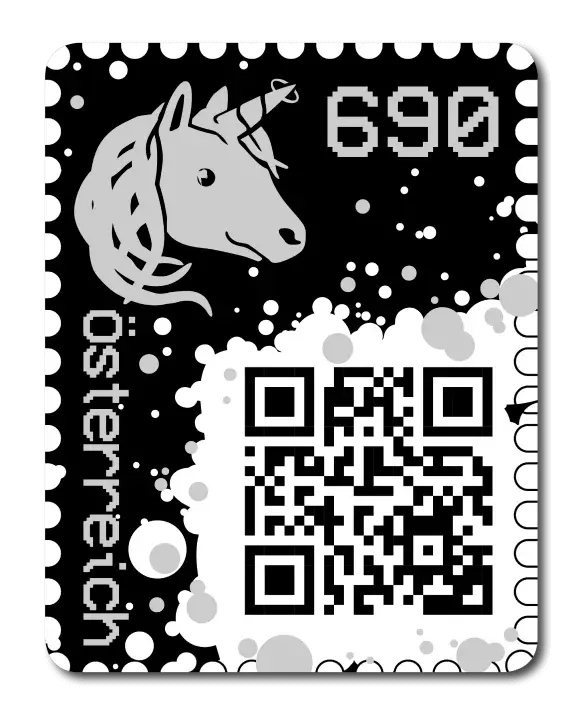
The Mainstream line is the heart of Austrian Post's crypto stamp program: each issue pairs a postally valid stamp (face value EUR 0.80–8.80) with an NFT minted on a public blockchain. Crypto Stamp 1.0 (Unicorn, 2019) was the first such product worldwide. Mintages typically run 15,000–240,000 pieces, with sale prices clearly above face value (premium for NFC chip + NFT pairing). From Crypto Stamp 2.0 onward (2020), the line moved from Ethereum (ERC-721) to Polygon (ERC-1155) to keep activation and transfer fees low.
Image rights pending
We have contacted the rights holder for permission to feature this image here.
Typical mintage
15.000–240.000
Typical price
8,90–24,90 EUR
Blockchains
ethereum, polygon
First issued
2019-06-11
The Mainstream line is the backbone of Austrian Post's crypto stamp program: every issue pairs a postally valid stamp with an NFT minted on a public blockchain. It is the original concept since 2019 and defines what "crypto stamp" means in the strict sense — physical paper + chip + on-chain record.
Mintage and price
Mainstream editions typically ship in mintages between 15,000 and 240,000 pieces. Crypto Stamp 1.0 (Unicorn, 2019) had the highest initial mintage at 150,000 pieces; Crypto Stamp 2.0 (Honey Bee, 2020) reached 240,000. Later issues such as CS 6.0 (Zeus, 2025) were deliberately printed smaller — around 25,000 pieces — to strengthen collector value.
Sale prices run EUR 8.90–24.90 per piece, clearly above face value (typically EUR 0.80–8.80). The premium covers the NFC chip, NFT pairing infrastructure, and the Variuscard AES-SUN NDEF security layer.
Technology
Crypto Stamp 1.0 runs as ERC-721 on Ethereum Mainnet — each of the 150,000 mint numbers is a unique token. From CS 2.0 onward (2020) Austrian Post moved to Polygon with ERC-1155, which drops transaction costs to fractions of a cent and makes activation through crypto.post.at effectively gas-free.
Every stamp carries an NFC chip (Variuscard, Vienna) with AES-SUN NDEF security. A smartphone tap produces a signed URL that is verified against the on-chain mint records. Authenticity is therefore checkable both physically and digitally — a clear distinguishing feature versus pure-digital NFT drops.
Secondary market
CS 1.0 trades on OpenSea (Ethereum). From CS 2.0 onward the secondary market runs mainly through cryptostamp.com (the official platform with verified sellers) and OpenSea (Polygon). Prices vary by variant rarity and physical-stamp condition; the on-chain component stays uniquely attributable through every transfer.
What distinguishes the Mainstream line from the Gold, Art, and Safe sub-lines?
Mainstream is mass-issue: typical mintage 15,000–240,000, sale price EUR 8.90–24.90. Gold editions embed a 1g gold bar from Münze Österreich (mintage 350–500, price ~EUR 500). Art editions are limited artist collaborations. Safe editions target cold-storage use cases. Mainstream is the line for regular collectors without niche requirements.
On which blockchains are Mainstream crypto stamps minted?
Crypto Stamp 1.0 (2019) runs on Ethereum Mainnet (ERC-721, mint numbers 1–150,000). From Crypto Stamp 2.0 onward (2020), Austrian Post moved to Polygon (ERC-1155) to keep activation and secondary-market transfer fees low. Collectors can trade CS 1.0 on OpenSea (Ethereum); from CS 2.0 onward the secondary market runs mainly through cryptostamp.com and OpenSea (Polygon).
How many editions does the Mainstream line have?
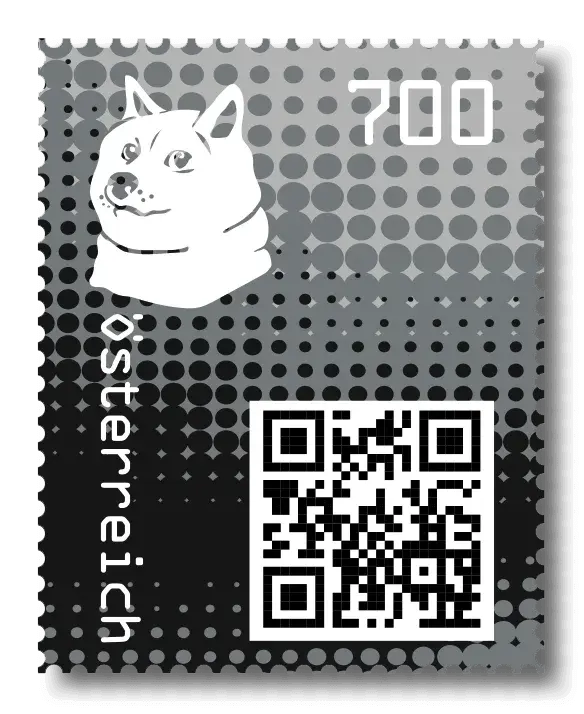
As of early 2026, the Mainstream line has eight main issues: Crypto Stamp 1.0 (Unicorn, 2019), 2.0 (Honey Bee, 2020), 3.0 (Eagle, 2021), 4.0 (Swan, 2022), 5.0 (Dog, 2023), 6.0 (Zeus, 2025), plus companion editions such as the 2025 Mythology family. Mintages vary widely: CS 1.0 had 150,000 pieces, CS 6.0 (Zeus) shipped at ~25,000.
Where can I buy Mainstream crypto stamps?
Primary issue: any branch of Austrian Post plus the post.at online shop during the sale window (typically 6–12 weeks from release). Secondary market: cryptostamp.com (the official platform with verified sellers), OpenSea (Polygon for CS 2.0+; Ethereum for CS 1.0), or peer-to-peer via the crypto stamp community. NFT-side activation always runs through crypto.post.at.